
Digital Remittance Nepal: How Homes Receive Money in Minutes, Not Weeks
Ramesh drove a bus in Doha for eight years and sent money home every month. Each transfer wore away part of his earnings. His mother walked to the agent office, waited in a queue, signed a paper slip, and collected cash a week later. The exchange rate ate another slice of the amount before it reached her hands.
That monthly ritual is now a tap on a phone. The same transfer can land in a wallet in Kathmandu or a bank account in Dadeldhura within minutes. This is not a small convenience. For millions of Nepali households, money from abroad decides whether the family eats well, pays school fees, and fixes the roof. Digital remittance Nepal makes sure that money arrives whole and on time.
Nepal depends on the earnings of its workers abroad. Remittances now make up a large share of the national economy, close to a quarter of gross domestic product in recent years, and the annual total runs into trillions of rupees. Millions of Nepalis work in the Gulf, Malaysia, South Korea, Japan, and beyond as drivers, nurses, cooks, and engineers. Their families use those flows for food, health, housing, and education.
Here is what matters at the household level: the service you pick decides how much of your money reaches home. A one percent difference in cost, repeated over years of monthly transfers, adds up to a serious amount. Let me explain how digital remittance Nepal works, what it really costs, the rules that protect it, and the mistakes to avoid.
Why Digital Remittance Nepal Is Growing Fast
The spread of mobile wallets built the foundation. In Nepal, more people carry a digital wallet in their phone every year. Services that began as phone credit counters now sit inside grocery shops, pharmacies, and bank branches. QR payment is common in city markets and in small towns.
Those same payment operators connect to global money transfer networks. A sender in Dubai can move money through an international app and have it arrive at a local wallet or bank account in Nepal. The sender never visits an office, and the receiver never stands in a queue.
Three forces drive the growth. First, the diaspora is young and comfortable with apps. Second, banks and payment operators made the wallet the fastest payout route. Third, Nepal Rastra Bank wrote clear rules for licensed operators, which gave providers a legal path and gave customers a safe one.
The numbers show the shift. Wallet operators add new customers every year, and the volume moving through digital channels keeps climbing. New corridors open regularly, and the age of the customer keeps dropping. The old habit of collecting a draft at a bank counter is fading fast.
The Real Cost of Digital Remittance Nepal
The old methods carried more than one cost. A bank draft or a telegraphic transfer collected three silent fees. One was an official markup on the exchange rate. Another was the flat transfer fee. The third was the price of time, because a week of waiting gave the currency room to move against the sender.
Digital remittance Nepal works differently. Many operators advertise a low fee or no fee at all. The real cost hides in the exchange rate, which is the part nobody discusses loudly. The provider earns a margin on the difference between the rate they buy and the rate they give you.
Let me put numbers on it. For a transfer of two hundred dollars, some traditional routes once took more than eight percent in combined costs. That is a painful loss for a working family. Good digital options now bring the total below three percent on many routes, and the wait drops from a week to minutes.
That gap matters over time. A worker who sends two hundred dollars every month for two years can save several hundred dollars just by choosing the cheaper route. That amount can cover a month of rent in Nepal.
Time is the second currency. A draft sat in transit for days. A digital transfer credits a wallet in minutes or settles into a bank account the same day. You cannot teach a queue to a wallet.
How Digital Remittance Nepal Works on a Phone
The steps are simple, but you should know them so you do not pay for something you do not need.
A sender opens an app in the country where they work. These are licensed money transfer services, from well known international brands to newer specialists. The sender enters the amount in the local currency. The app shows the exact rupees that will arrive in Nepal and the total fee in plain numbers before the sender confirms.
Behind the screen, the app sends a secure message to a licensed payment operator in Nepal. That operator pays out in Nepali rupees, either straight into a wallet or into a bank account linked to the wallet. The sender does not need a bank branch in Nepal, only a wallet ID or an account number.
The receiver side is just as simple. A family member opens the wallet app and sees the money land in the balance within minutes. They can pay a shop by QR code or withdraw cash at a nearby agent outlet. If they keep the money in a bank, the operator can settle it there too.
Here is a real example. A worker in Saudi Arabia opens a wallet app, enters the amount in riyals, and sees the rupee total before the final tap. His mother in a district town opens her wallet and the money is ready to spend. The whole journey takes under ten minutes.
The Rules That Shape Digital Remittance Nepal
One gatekeeper stands over the whole system: Nepal Rastra Bank. The central bank licenses payment operators and sets the rules for moving money. Only approved players can accept foreign remittance and convert it into rupees.
The rules are mostly about knowing the parties. A sender must have a verified identity in the app they use. A receiver needs a basic identity check, usually a document and an address, before they can open a wallet and withdraw. This is the same know your customer process that banks use, scaled down for a phone.
The rules also set limits. Operators cap how much a person can receive in a day and in a month. The caps protect customers and satisfy reporting requirements. If a family ever needs to receive a larger amount, a bank can handle the transfer through standard channels.
These rules do not slow the system down. The trade is simple: the operator checks identities, and in return the flow stays legal and safe even for small amounts. No bank visit is needed for each transfer.
The formal system protects users in a way that informal channels never can. An app running on a legal license beats an underground route where your money can vanish with no way to recover it.
Dangers to Spot Before You Send Money
Digital remittance Nepal is a remarkable tool, but fraud attempts exist. The most common trick is a fake app or a fake website carrying the logo of a well known service. These fakes offer tempting rates, take your money, and disappear.
The second risk is a rate trick. An app can advertise a low fee while hiding a wide gap in the exchange rate. A fee of one dollar combined with a rate four percent below the official price costs more than an honest app with a one percent margin.
The third risk is your own data. Some platforms ask for extra copies of documents or one time codes. A common attack starts with a caller who asks for the code that just arrived on your phone. If the sender or the receiver shares that code, the wallet drains in seconds.
Stay safe with three habits. Use only operators that hold a license, either the provider abroad or the licensed receiver in Nepal. Compare the displayed rate with the public market rate, which reveals the real spread. Never share passwords or one time codes with anyone who calls and asks for them.
What Comes Next for Digital Remittance Nepal
The next few years will bring cheaper and faster routes. More providers will add direct wallet to wallet corridors, cutting out middle steps. QR payments are already spreading across Nepali shops, and wallet to wallet transfers will follow the same path.
Shared infrastructure is on the way. Operators are talking about common rails so a sender can reach any wallet in Nepal through one connection, the way phone networks connect with each other. That makes settlement cheaper and opens the market to smaller providers.
Banks are joining the movement too. Many now link their apps to cross border rails so money can move from a foreign wallet into a bank account without a manual step. The boundary between wallet and bank is becoming invisible to the customer.
Fraud control is changing as well. Operators use data analytics to flag unusual transfers in real time, which protects the household before the loss happens. Rate competition continues to push costs down, and the choice of apps keeps growing.
The direction is clear. Sending money to Nepal is becoming as easy as sending a message, and the money that arrives will be more of it, faster, and safer than ever before.
Frequently Asked Questions
1. How long does a digital remittance take to reach a wallet?
Most digital remittance Nepal channels settle in minutes. A transfer from an international app to a licensed Nepal operator usually arrives within a few minutes, while a bank account credit can take up to one business day. Most receivers see the money the same day.
2. What is a fair price for digital remittance Nepal?
A good rule of thumb is the World Bank average, which sits around six percent for a transfer of two hundred dollars. Digital routes to Nepal often come in below that average. A provider that publishes the rate and the fee in plain numbers is the safest choice.
3. Do I need a bank account to receive money?
No. A mobile wallet with a verified identity can receive transfers on most routes, and the wallet can also forward the amount to a bank account. Some payouts settle into the wallet, others clear into the linked bank account. Enter both details when the provider asks.
4. Is the advertised fee the real cost?
No. The fee is only the visible part. The exchange rate carries the rest of the cost, because the provider earns a margin on the rate. Compare the displayed rate with a public market rate before you confirm, and the hidden spread becomes obvious.
5. Which apps are authorized for digital remittance Nepal?
The list changes as licenses are issued and routes open. The reliable way to check is the list of licensed payment operators published by Nepal Rastra Bank. An app backed by a named licensed partner is safe to use. An app running without a license is a risk you cannot see.
Take the Next Step
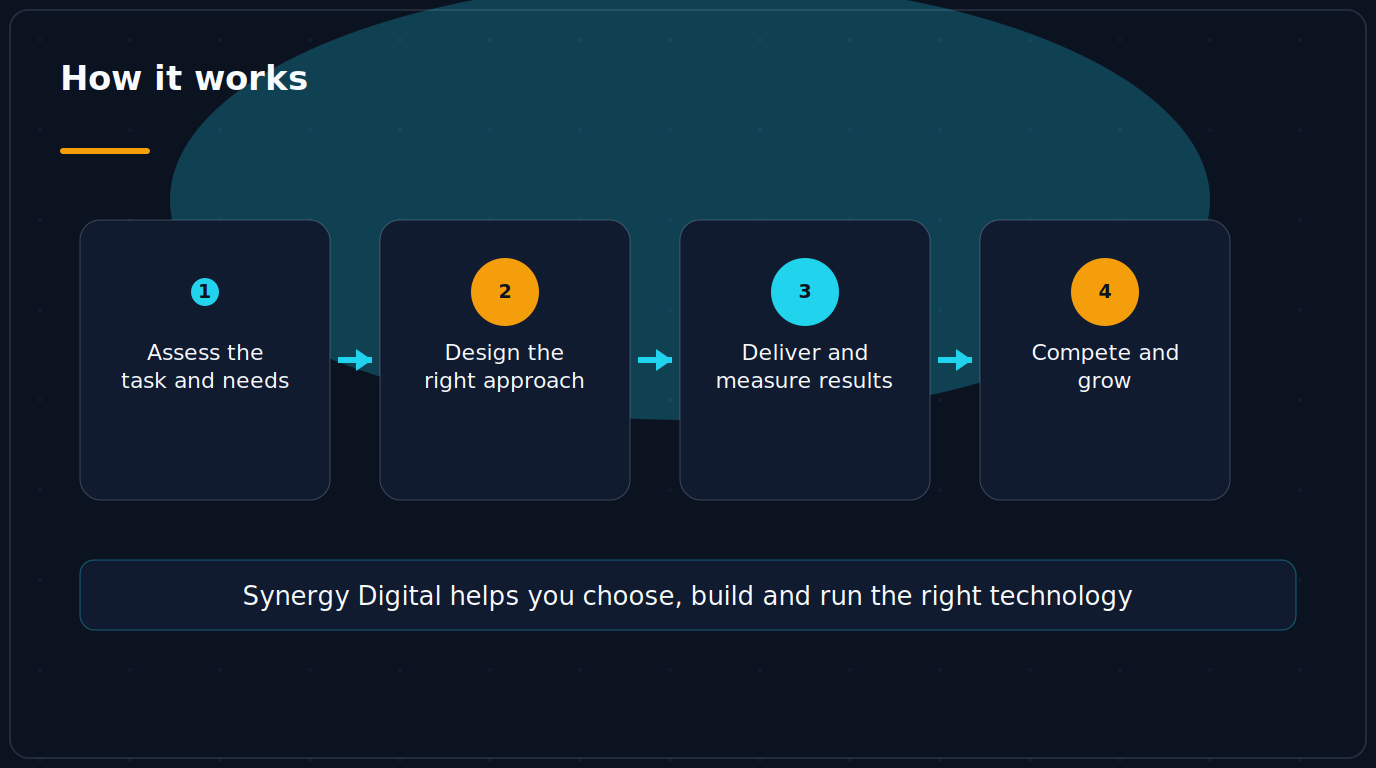
Money service projects in Nepal succeed on clean data and fast delivery. The team at Synergy Digital builds the integration layer for remittance, wallet, and payment operators in the Nepali market, with a track record in payment architecture and fraud detection. If your plan is a new money service or the next generation of an existing one, start the conversation at https://www.synergy.com.np and find out what it takes to go live without the guesswork.