

Brain Drain vs. Brain Gain
For years, the conversation around Nepali talent has followed the same tired script. Young people leave. Skills leave. The country loses momentum. That pattern is brain drain. It is not a new problem. It is a structural one. The real question now is whether we can flip the script. The answer is already taking shape. Artificial intelligence is changing how work gets done. It is removing borders from daily tasks. It is turning local talent into global contributors. Here is what matters. We are standing at a turning point. The choice between brain drain and brain gain is no longer about geography. It is about access, skills, and how we use new tools. Let me explain how AI is quietly rewriting the rules for Nepali youth.
Why Leaving Is No Longer the Only Option
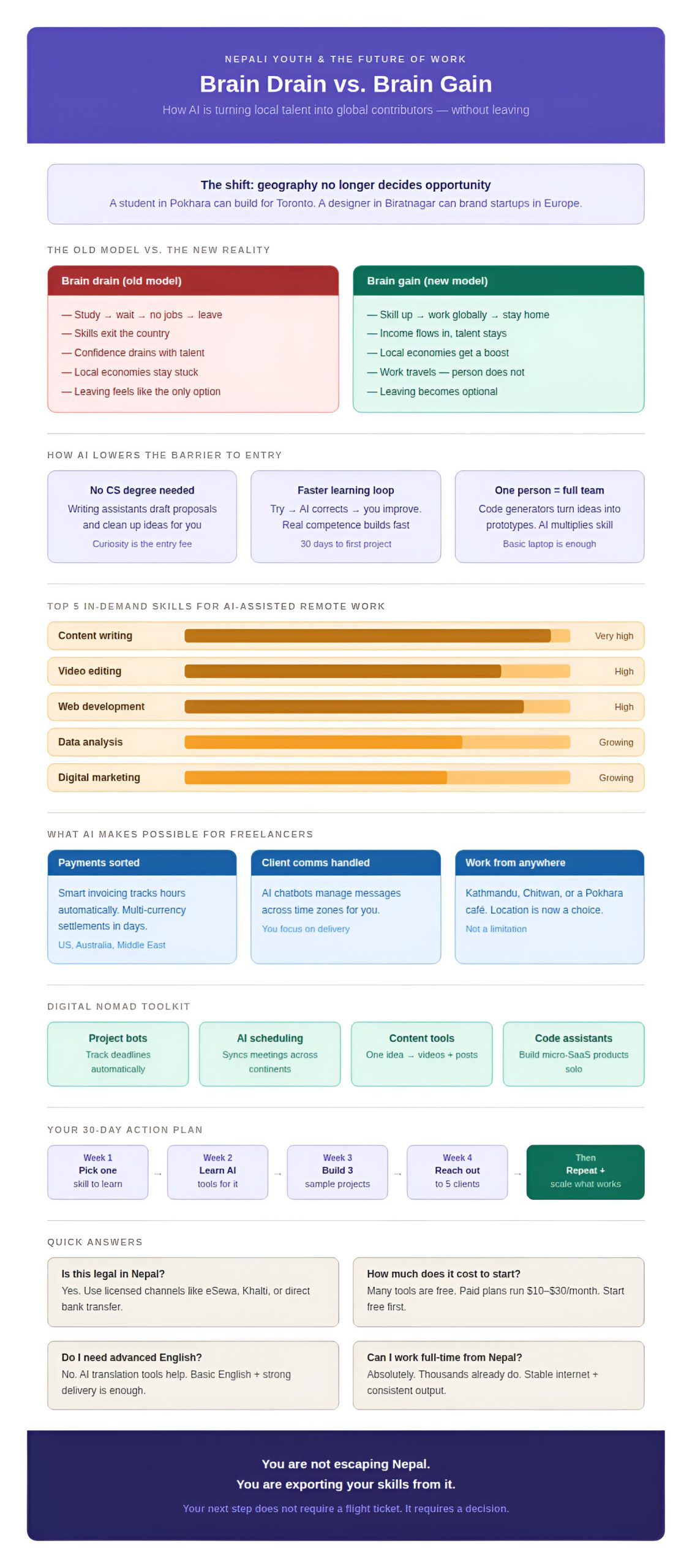
The old model was simple. You study. You wait for a job that may or may not exist. You leave if you want to earn more. That cycle drained villages, cities, and entire industries. It also drained confidence. Young people started believing their potential only had value abroad. AI changes that math. Tools now handle translation, coding, design, and data analysis at a fraction of the old cost. A student in Pokhara can build a website for a client in Toronto. A graphic designer in Biratnagar can create branding kits for startups in Europe. The work travels. The person does not have to. This shift moves us from brain drain to brain gain. Talent stays. Income flows in. Local economies get a boost. The infrastructure is already here. You just need to know how to use it.
How AI Lowers the Barrier to Entry
You do not need a computer science degree to start earning online. You need curiosity and a willingness to learn. AI platforms have stripped away the technical walls that once kept people out. Writing assistants help draft proposals. Code generators turn ideas into working prototypes. Video editors automate trimming, captions, and color grading. These tools do not replace skill. They multiply it. A young person with basic English and a laptop can now offer services that used to require a full team. The learning curve is shorter. The feedback loop is faster. You try something. The tool corrects it. You improve. That cycle builds real competence. When skill meets opportunity, you stop exporting talent. You start keeping it. That is the core of brain gain.
Remote Work That Pays in Real Time
Freelancing used to mean chasing payments through unreliable platforms. It meant dealing with currency conversion fees and long waiting periods. AI has cleaned up that mess. Smart invoicing tools track hours automatically. Payment gateways handle multi-currency settlements in days. AI chatbots manage client communication across time zones. You focus on delivery. The system handles the rest. Nepali freelancers are already using these setups to work with clients in the US, Australia, and the Middle East. The rates are competitive. The hours are flexible. You can work from a quiet room in Kathmandu or a café in Chitwan. The location stops being a limitation. It becomes a choice. When young people see steady income without packing bags, the conversation shifts. Staying becomes logical. Leaving becomes optional.
Building a Digital Nomad Life from Home
Digital nomad used to sound like a luxury reserved for tech workers with savings and visas. Now it is a work style anyone can adopt. AI makes remote work sustainable. Project management bots track deadlines. AI scheduling tools sync meetings across continents. Content repurposing tools turn one idea into videos, posts, and newsletters. You run a lean operation. You do not need an office. You do not need a team of ten. You need discipline and a reliable internet connection. Nepali youth are already testing this model. Some run e-commerce stores. Others manage social media for foreign brands. A few build micro-SaaS tools using AI code assistants. The income supports travel. The work supports the lifestyle. You are not escaping Nepal. You are exporting your skills from it. That distinction matters. It turns brain drain into brain gain.
What You Need to Start Today
The tools will not do the work for you. They will only speed it up. You still need to learn how to solve problems. You still need to understand client needs. You still need to deliver quality. AI handles the heavy lifting. You handle the judgment. Start with one skill. Pick writing, design, data entry, or basic coding. Spend thirty days learning the AI tools that support it. Build three sample projects. Put them online. Reach out to five potential clients. Repeat. Track what works. Drop what does not. The learning does not stop. The tools change every few months. Your ability to adapt becomes your real asset. When you combine local roots with global tools, you create a career that does not require a passport. Bottom line. That is how brain drain turns into brain gain.
The future of work is not waiting for you abroad. It is already here. AI has removed the old barriers. The rest is up to you. Pick a skill. Learn the tools. Start small. Scale with consistency. If you want structured training, mentorship, and a clear path to remote work, explore what Synergy Nepal offers. Your next step does not require a flight ticket. It requires a decision.
Frequently Asked Questions
Is AI remote work legal and safe for Nepali freelancers?
Yes. Working remotely with international clients is legal in Nepal. Use licensed payment channels like eSewa, Khalti, or direct bank transfers. Stick to reputable platforms and always sign clear agreements before starting any project.
Do I need advanced English to work with foreign clients?
Not always. AI translation and writing tools help you communicate clearly. Basic English plus strong delivery skills is enough to start. You can improve your language skills over time as you handle more projects.
How much does it cost to start using AI for freelancing?
Many AI tools offer free tiers. Paid plans usually range from ten to thirty dollars a month. Start free. Upgrade only when your income justifies the expense. Never spend money on software before you have a paying client.
Can I work full-time from Nepal without leaving?
Absolutely. Thousands of Nepali professionals work remotely for global companies. You need a stable internet connection, a quiet workspace, and consistent output. Treat your home desk like a real office and you will earn like one.
What skills are in highest demand for AI-assisted remote work?
Content writing, video editing, web development, data analysis, and digital marketing lead the list. Pair any of these with AI tools and you will find steady work. Focus on solving real business problems and the income will follow.


