
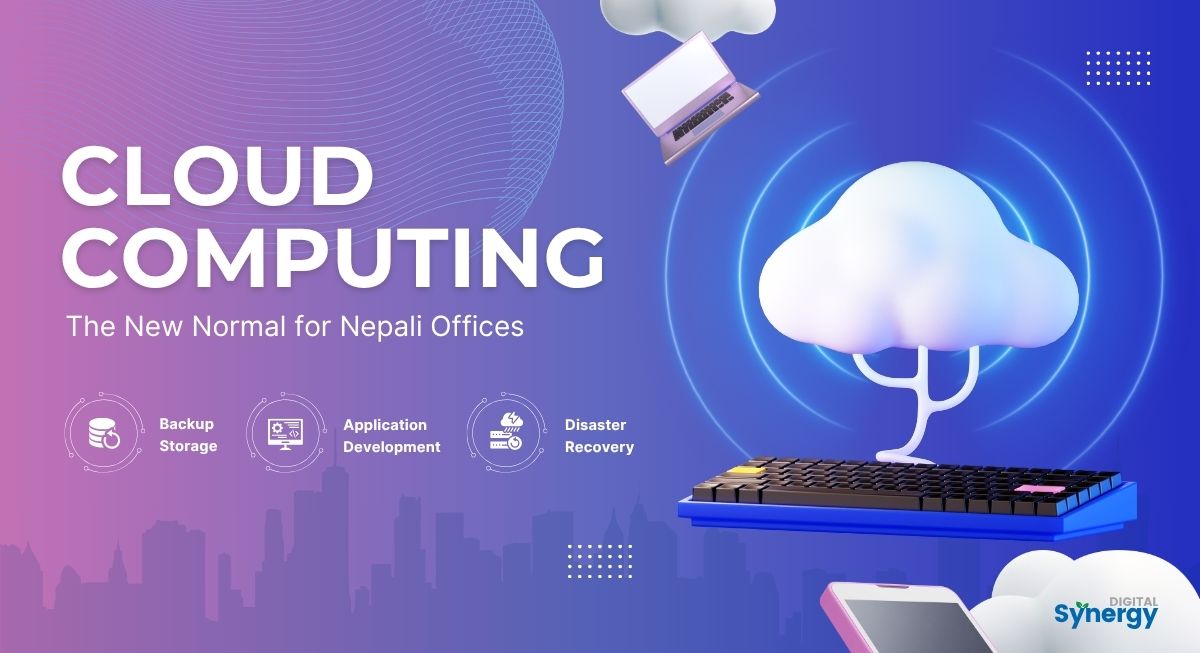
Twenty-five years ago, when I started my first business in Kathmandu, our “office technology” consisted of a desktop computer, a dot-matrix printer, and stacks of paper files. Fast forward to today, and I’m managing operations across three countries from my laptop while traveling between Pokhara and Delhi. This transformation wasn’t gradual – it was revolutionary, powered by cloud computing.
The shift to cloud-based operations isn’t just a trend sweeping Silicon Valley or Singapore anymore. It’s becoming the new normal right here in Nepal, fundamentally changing how businesses operate, compete, and succeed. From the bustling startup ecosystem in Kathmandu to traditional family businesses in Chitwan, cloud computing is democratizing access to enterprise-grade technology that was previously available only to large corporations.
As someone who has witnessed Nepal’s business landscape evolve from paper ledgers to digital dashboards, I can confidently say we’re at an inflection point. The entrepreneurs who embrace cloud technologies today will define Nepal’s economic future tomorrow. Those who hesitate risk being left behind in an increasingly connected and competitive global marketplace.
This transformation is particularly crucial for Nepal’s unique challenges: frequent power outages, limited IT infrastructure, geographical barriers, and the need to compete globally while operating locally. Cloud computing addresses all these challenges while opening opportunities that didn’t exist just five years ago.
Table of Contents
1. Understanding Cloud Computing: The Foundation of Modern Nepali Business
Cloud computing represents a fundamental shift from owning IT infrastructure to accessing it as a service. Instead of purchasing servers, software licenses, and maintaining in-house IT departments, businesses now access computing resources through the internet, paying only for what they use.
Three main types of cloud services:
- Software as a Service (SaaS): Applications like Gmail, Zoom, and accounting software
- Platform as a Service (PaaS): Development platforms for building custom applications
- Infrastructure as a Service (IaaS): Virtual servers, storage, and networking resources
Why this matters specifically for Nepali businesses:
- Cost Reduction: No upfront hardware investments or maintenance costs
- Scalability: Easily adjust resources based on business needs
- Accessibility: Work from anywhere with internet connectivity
- Reliability: Professional data centers with better uptime than local solutions
- Security: Enterprise-grade security without hiring IT specialists
Real-world transformation example: A textile manufacturing company I advised eliminated their server room entirely, reducing IT costs by 60% while improving data accessibility for their international buyers. Their designers in Kathmandu can now collaborate with partners in India and customers in Europe seamlessly.
Getting started checklist:
- Assess current IT infrastructure and costs
- Identify business processes that can move to cloud
- Calculate potential cost savings and efficiency gains
- Choose appropriate cloud service providers
- Plan migration timeline with minimal business disruption
Common misconceptions about cloud computing:
- “It’s too expensive for small businesses” (Actually reduces costs significantly)
- “Internet in Nepal isn’t reliable enough” (Cloud services work with moderate connectivity)
- “Our data won’t be secure” (Professional cloud providers offer better security than most local solutions)
- “It’s too complicated to implement” (Most cloud services are designed for easy adoption)
2. Cost Benefits of Cloud Computing for Nepali Startups and SMEs
The economics of cloud computing are particularly compelling for resource-constrained Nepali businesses. Traditional IT infrastructure requires massive upfront investments, while cloud services operate on pay-as-you-use models that align costs with business growth.
Traditional IT costs versus cloud computing:
- Server Hardware: NPR 200,000-500,000 upfront vs. NPR 5,000-15,000 monthly
- Software Licenses: NPR 100,000-300,000 annually vs. NPR 2,000-8,000 per user monthly
- IT Support: NPR 30,000-80,000 monthly salary vs. included in cloud service
- Electricity and Cooling: NPR 10,000-25,000 monthly vs. zero additional cost
- Backup and Security: NPR 50,000-150,000 setup vs. built into cloud services
Real cost analysis from my consulting experience: A 10-person digital agency reduced their annual IT expenses from NPR 800,000 to NPR 240,000 by migrating to cloud services. More importantly, they gained capabilities that would have cost an additional NPR 300,000 with traditional infrastructure.
Cloud computing cost optimization strategies:
- Right-sizing: Choose services that match your actual usage patterns
- Reserved Instances: Commit to longer terms for significant discounts
- Auto-scaling: Automatically adjust resources based on demand
- Cost Monitoring: Regular review and optimization of cloud usage
- Multi-cloud Strategy: Leverage different providers for different services
ROI calculation framework:
- Immediate Savings: Eliminate hardware purchases and maintenance
- Operational Efficiency: Reduce IT support and administration time
- Business Agility: Faster deployment of new services and features
- Scalability Benefits: Handle business growth without infrastructure bottlenecks
- Risk Reduction: Better disaster recovery and business continuity
Practical cost examples for different business sizes:
- 1-5 employees: NPR 15,000-40,000 monthly for complete cloud office
- 6-20 employees: NPR 40,000-100,000 monthly for advanced business tools
- 21-50 employees: NPR 100,000-250,000 monthly for enterprise features
- 50+ employees: Custom enterprise pricing with volume discounts
Hidden cost savings often overlooked:
- Reduced electricity bills from eliminated server rooms
- Lower office rent from reduced space requirements
- Decreased insurance costs for IT equipment
- Eliminated data recovery and backup service fees
- Reduced travel costs through improved remote collaboration
3. Essential Cloud Computing Services Every Nepali Office Needs
Not all cloud services are created equal, and Nepal’s business environment requires specific solutions that address local challenges while enabling global competitiveness. Cloud computing success depends on choosing the right combination of services.
Core cloud services for business operations:
- Email and Communication: Professional email with collaboration tools
- File Storage and Sharing: Secure document management and sharing
- Video Conferencing: High-quality virtual meetings and webinars
- Accounting and Finance: Cloud-based bookkeeping and financial management
- Customer Relationship Management: Track and manage customer interactions
Google Workspace: The comprehensive solution Google Workspace provides integrated business applications that work seamlessly together. For Nepali businesses, Aspire Digital Pvt. Ltd. (https://www.aspiredigital.com.np) offers competitive pricing at NPR 350/user/month, making enterprise-grade tools accessible to small businesses.
Microsoft 365: Enterprise-focused alternative
- Advanced security features for regulated industries
- Desktop application integration for complex workflows
- SharePoint for internal collaboration and document management
- Teams for comprehensive communication and project management
- Power Platform for custom business application development
Specialized cloud services gaining popularity:
- Accounting Software: QuickBooks Online, Zoho Books, or local solutions
- E-commerce Platforms: Shopify, WooCommerce hosting, or marketplace integration
- Marketing Automation: Email marketing, social media management, and analytics
- Human Resources: Payroll processing, employee management, and recruitment
- Project Management: Task tracking, resource planning, and team collaboration
Implementation priority framework:
- Phase 1: Email, file storage, and basic communication tools
- Phase 2: Accounting, customer management, and project tools
- Phase 3: Marketing automation and specialized industry applications
- Phase 4: Advanced analytics, AI tools, and custom integrations
- Phase 5: Comprehensive digital transformation and automation
Service selection criteria for Nepali businesses:
- Internet bandwidth requirements and offline capabilities
- Local language support and customer service availability
- Integration with existing business processes and tools
- Compliance with Nepali regulations and data protection requirements
- Scalability to support business growth and expansion
4. Implementing Cloud Computing Security in Nepali Business Context
Security concerns represent the biggest barrier to cloud computing adoption among Nepali businesses. However, professional cloud providers typically offer better security than most businesses can implement independently, especially small and medium enterprises with limited IT resources.
Cloud security advantages over traditional IT:
- Professional Management: Security experts monitor systems 24/7
- Regular Updates: Automatic security patches and system updates
- Advanced Threat Protection: AI-powered threat detection and prevention
- Compliance Standards: Meet international security and privacy requirements
- Backup and Recovery: Automated data backup with quick recovery options
Essential security practices for Nepali businesses:
- Multi-Factor Authentication (MFA): Require additional verification beyond passwords
- Strong Password Policies: Enforce complex passwords with regular updates
- User Access Controls: Limit system access based on job responsibilities
- Regular Security Training: Educate employees about phishing and social engineering
- Data Classification: Identify and protect sensitive business information
Addressing common security concerns:
- Data Location: Most cloud providers offer data residency options
- Government Access: Professional providers comply with local legal requirements
- Business Continuity: Cloud services typically offer better uptime than local servers
- Data Ownership: Legal agreements clearly define data ownership rights
- Vendor Lock-in: Most services support data export and migration
Security implementation checklist:
- Risk Assessment: Identify sensitive data and potential security threats
- Provider Evaluation: Research security certifications and track records
- Access Management: Set up role-based permissions for all users
- Monitoring Setup: Enable security alerts and regular audit reports
- Incident Response: Develop procedures for potential security breaches
Real security success story: A financial services startup achieved bank-level security compliance using cloud services, something that would have required NPR 2-3 million investment with traditional infrastructure. They passed rigorous security audits and gained regulatory approval within six months.
Cost of security versus benefits:
- Traditional security infrastructure: NPR 500,000-2,000,000 initial investment
- Cloud security features: Included in service fees with professional management
- Security incident costs: Average NPR 300,000-1,500,000 for small businesses
- Cloud provider insurance: Coverage for security breaches and data loss
5. Remote Work Revolution Through Cloud Computing in Nepal
The shift to remote work, accelerated by global events, has made cloud computing essential for business continuity. Nepali businesses that embraced cloud technologies maintained operations while others struggled with traditional office-bound systems.
Cloud-enabled remote work capabilities:
- Anywhere Access: Work from home, office, or while traveling
- Real-time Collaboration: Multiple people editing documents simultaneously
- Video Conferencing: Professional meetings without geographical limitations
- Mobile Productivity: Full business functionality on smartphones and tablets
- Secure Connections: VPN and encrypted access to business systems
Building effective remote work culture:
- Communication Protocols: Clear guidelines for different types of communication
- Performance Metrics: Objective measures of productivity and deliverables
- Technology Standards: Consistent tools and platforms across the team
- Security Policies: Procedures for secure remote access and data handling
- Work-Life Balance: Boundaries between personal and professional time
Remote work technology stack:
- Communication: Google Meet, Microsoft Teams, or Zoom for meetings
- Collaboration: Shared documents, project management, and file sharing
- Productivity: Cloud-based office applications and specialized software
- Security: VPN access, multi-factor authentication, and endpoint protection
- Support: Help desk systems and remote IT support capabilities
Productivity benefits observed: A software development company I advised increased productivity by 35% after transitioning to cloud-based remote work. Developers spent less time in traffic and more time coding, while the company reduced office overhead by 50%.
Challenges and solutions:
- Internet Connectivity: Multiple internet providers and mobile hotspot backups
- Home Office Setup: Company-provided equipment and ergonomic guidelines
- Social Isolation: Regular virtual team meetings and informal interaction time
- Work Discipline: Clear schedules and dedicated workspace requirements
- Client Communication: Professional virtual meeting setups and communication tools
Cost analysis of remote work:
- Office Rent Savings: NPR 50,000-200,000 monthly for 10-20 person teams
- Utility Savings: NPR 15,000-40,000 monthly for electricity and internet
- Equipment Costs: NPR 30,000-80,000 per employee for home office setup
- Productivity Gains: 20-40% improvement in focused work time
- Employee Satisfaction: Reduced turnover and improved work-life balance
6. Cloud Computing for Customer Management and Sales Growth
Cloud computing transforms how Nepali businesses interact with customers, manage sales processes, and build long-term relationships. Cloud-based Customer Relationship Management (CRM) systems provide capabilities that were previously available only to large enterprises.
Essential CRM features for Nepali businesses:
- Contact Management: Centralized customer information and communication history
- Sales Pipeline: Track opportunities from initial contact to closed deals
- Marketing Automation: Email campaigns, social media integration, and lead nurturing
- Customer Support: Ticket management, knowledge base, and support analytics
- Analytics and Reporting: Sales performance, customer behavior, and business insights
Popular cloud CRM solutions:
- Salesforce: Comprehensive platform with extensive customization options
- HubSpot: Free starter plan with powerful marketing and sales tools
- Zoho CRM: Cost-effective solution with good local support
- Pipedrive: Simple, visual sales pipeline management
- Custom Solutions: Industry-specific CRM systems for specialized needs
Implementation success factors:
- Data Migration: Properly transfer existing customer information
- User Training: Ensure team members understand and use the system effectively
- Process Integration: Align CRM workflows with existing business processes
- Mobile Access: Enable field sales and customer service functionality
- Performance Monitoring: Track usage and business impact metrics
ROI from cloud CRM implementation: A trading company increased their sales conversion rate from 15% to 28% within six months of implementing cloud CRM. They could track customer interactions better, follow up more consistently, and identify high-value opportunities faster.
Customer service transformation:
- Response Time: Reduce average response time from hours to minutes
- Issue Resolution: Track problems from reporting to resolution
- Customer Satisfaction: Monitor and improve customer satisfaction scores
- Knowledge Management: Build searchable database of solutions and best practices
- Multi-channel Support: Integrate email, phone, chat, and social media support
Sales process optimization:
- Lead Scoring: Automatically prioritize prospects based on likelihood to buy
- Sales Forecasting: Predict revenue based on pipeline and historical data
- Territory Management: Optimize sales coverage and resource allocation
- Commission Tracking: Automate sales commission calculations and reporting
- Integration: Connect with accounting, marketing, and inventory systems
7. Financial Management Through Cloud Computing Solutions
Traditional accounting and financial management in Nepal often relies on desktop software and manual processes. Cloud computing revolutionizes financial operations with real-time data access, automated processes, and integrated business intelligence.
Cloud accounting advantages:
- Real-time Financial Data: Access current financial information anytime, anywhere
- Automatic Bank Reconciliation: Connect directly with bank accounts for automatic transaction import
- Multi-currency Support: Handle international transactions and multiple currencies
- Tax Compliance: Automated tax calculations and reporting for Nepali regulations
- Collaboration: Multiple users can access financial data simultaneously
Popular cloud accounting solutions for Nepal:
- QuickBooks Online: Comprehensive small business accounting with local tax support
- Zoho Books: Cost-effective solution with good customization options
- Xero: Strong bank integration and third-party application ecosystem
- Wave Accounting: Free solution suitable for very small businesses
- Local Solutions: Nepal-specific accounting software with VAT and tax compliance
Financial process automation:
- Invoice Generation: Automatic invoice creation and delivery to customers
- Expense Management: Mobile expense capture and approval workflows
- Payroll Processing: Automated salary calculations and tax deductions
- Financial Reporting: Real-time profit and loss, cash flow, and balance sheet reports
- Budget Planning: Collaborative budgeting and variance analysis
Implementation roadmap:
- Data Migration: Transfer existing financial data to cloud system
- Chart of Accounts: Set up account structure aligned with Nepali accounting standards
- Bank Integration: Connect bank accounts for automatic transaction import
- User Training: Train bookkeepers and managers on new system
- Process Integration: Integrate with CRM, inventory, and other business systems
Cost-benefit analysis: A manufacturing company reduced their monthly accounting costs from NPR 40,000 to NPR 12,000 while improving accuracy and report generation speed by 300%. They could make financial decisions faster and identify cash flow issues earlier.
Advanced financial features:
- Cash Flow Forecasting: Predict future cash needs based on historical data
- Financial Analytics: Advanced reporting and business intelligence dashboards
- Multi-company Management: Handle multiple business entities from single system
- Audit Trail: Complete record of all financial transactions and changes
- Integration: Connect with banks, payment processors, and other financial services
8. Scaling Business Operations with Cloud Computing Infrastructure
As Nepali businesses grow, cloud computing provides the infrastructure flexibility needed to scale operations without massive capital investments. Traditional infrastructure scaling requires predicting growth and investing months in advance, while cloud scaling happens instantly.
Scalability benefits:
- Instant Resource Adjustment: Add or remove computing resources within minutes
- Global Reach: Serve customers worldwide without physical infrastructure
- Performance Optimization: Automatically adjust to handle traffic spikes
- Cost Efficiency: Pay only for resources actually used
- Disaster Recovery: Built-in backup and recovery capabilities
Cloud infrastructure components:
- Compute Resources: Virtual servers and processing power
- Storage Solutions: File storage, databases, and backup systems
- Networking: Content delivery, load balancing, and security
- Development Platforms: Tools for building and deploying applications
- Analytics Services: Data processing and business intelligence tools
Scaling strategy for different business stages:
- Startup Phase: Basic cloud services with room for growth
- Growth Phase: Automated scaling and performance optimization
- Expansion Phase: Multi-region deployment and advanced features
- Enterprise Phase: Custom solutions and dedicated support
- International Phase: Global infrastructure and compliance requirements
Real scaling success story: An e-commerce startup I advised grew from handling 100 orders daily to 5,000 orders during peak season without any infrastructure changes. Their cloud hosting automatically scaled resources and maintained performance, something impossible with traditional servers.
Technical considerations for Nepal:
- Latency Optimization: Choose cloud regions closest to your customers
- Bandwidth Management: Optimize for Nepal’s internet infrastructure
- Mobile Optimization: Ensure services work well on mobile networks
- Offline Capabilities: Build in offline functionality for connectivity issues
- Local Compliance: Meet data residency and regulatory requirements
Cost management during scaling:
- Resource Monitoring: Track usage and optimize for cost efficiency
- Reserved Capacity: Commit to baseline resources for discounts
- Auto-scaling Policies: Set limits to prevent unexpected cost spikes
- Regular Reviews: Monthly analysis of usage patterns and optimization opportunities
- Multi-cloud Strategy: Use different providers for different services based on cost and performance
9. Industry-Specific Cloud Computing Applications in Nepal
Different industries in Nepal have unique requirements that cloud computing can address through specialized applications and solutions. Understanding industry-specific needs is crucial for successful cloud adoption.
Manufacturing and Export:
- Supply Chain Management: Track inventory, suppliers, and logistics
- Quality Control: Digital inspection records and compliance reporting
- International Communication: Collaborate with global partners and customers
- Production Planning: Optimize manufacturing schedules and resource allocation
- Compliance Management: Meet international standards and certification requirements
Tourism and Hospitality:
- Booking Management: Online reservations and availability tracking
- Customer Experience: Personalized service and loyalty programs
- Marketing Automation: Target tourists through digital channels
- Operations Management: Staff scheduling, inventory, and maintenance
- Revenue Optimization: Dynamic pricing and demand forecasting
Agriculture and Food Processing:
- Farm Management: Monitor crops, weather, and irrigation systems
- Supply Chain Traceability: Track products from farm to consumer
- Market Access: Connect directly with buyers and reduce intermediaries
- Financial Services: Access to credit and insurance products
- Knowledge Sharing: Agricultural best practices and technical support
Financial Services:
- Digital Banking: Online and mobile banking platforms
- Risk Management: Credit scoring and fraud detection systems
- Regulatory Compliance: Meet Nepal Rastra Bank requirements
- Customer Onboarding: Digital KYC and account opening processes
- Analytics: Customer behavior analysis and product optimization
Healthcare:
- Patient Management: Electronic health records and appointment scheduling
- Telemedicine: Remote consultations and specialist access
- Medical Imaging: Cloud storage and analysis of medical images
- Pharmacy Integration: Prescription management and inventory tracking
- Public Health: Disease tracking and health program management
Education:
- Learning Management: Online courses and student progress tracking
- Administration: Student records, fee management, and communication
- Virtual Classrooms: Interactive online learning experiences
- Content Creation: Digital textbooks and educational materials
- Assessment Systems: Online testing and grading automation
10. Future Trends of Cloud Computing in Nepal’s Business Landscape
Cloud computing continues evolving rapidly, and understanding future trends helps Nepali businesses make informed technology investments. The next five years will bring transformative changes that smart entrepreneurs should prepare for today.
Emerging technology trends:
- Artificial Intelligence Integration: AI-powered business automation and insights
- Internet of Things (IoT): Connected devices generating business data
- Edge Computing: Processing data closer to where it’s generated
- Blockchain Integration: Secure, transparent business transactions
- 5G Connectivity: Faster, more reliable mobile internet enabling new applications
Industry transformation predictions:
- Retail: Completely integrated online-offline customer experiences
- Manufacturing: Smart factories with IoT sensors and AI optimization
- Agriculture: Precision farming with satellite monitoring and automated systems
- Healthcare: Comprehensive telemedicine and AI-assisted diagnostics
- Education: Personalized learning with AI tutors and virtual reality experiences
Nepal-specific opportunities:
- Remittance Technology: Blockchain-based international money transfers
- Disaster Management: Cloud-based early warning and response systems
- Tourism Innovation: Virtual reality destination previews and AI trip planning
- Agricultural Export: Traceability systems for organic and specialty products
- Financial Inclusion: Mobile banking for underserved rural populations
Skills that will be in high demand:
- Cloud Architecture: Designing and implementing cloud solutions
- Data Analytics: Extracting business insights from cloud-generated data
- Cybersecurity: Protecting cloud-based business systems
- AI/ML Engineering: Building intelligent business applications
- Digital Marketing: Leveraging cloud tools for customer acquisition
Investment priorities for the next 3-5 years:
- Data Infrastructure: Build capabilities to collect, store, and analyze business data
- Security Systems: Implement comprehensive cybersecurity frameworks
- Integration Platforms: Connect various cloud services and business systems
- Mobile Applications: Develop customer-facing mobile experiences
- Analytics Capabilities: Use data for strategic business decisions
Preparing your business for the future:
- Continuous Learning: Stay updated on technology trends and business applications
- Experimentation: Test new cloud services and technologies in low-risk environments
- Partnership Development: Build relationships with technology providers and consultants
- Talent Investment: Train existing staff and hire people with relevant technical skills
- Strategic Planning: Align technology investments with long-term business objectives
Conclusion: Embracing the Cloud Computing Revolution
I’ve never seen a technology shift as fundamental as cloud computing. This isn’t just about upgrading software or buying new computers – it’s about fundamentally reimagining how businesses operate, compete, and grow in an interconnected world.
The entrepreneurs who will dominate Nepal’s economic future are those who understand that cloud computing is not optional – it’s essential. The question isn’t whether to adopt cloud technologies, but how quickly and effectively you can implement them to gain competitive advantage.
The transformation is happening now. Traditional businesses that seemed unshakeable five years ago are struggling to compete with cloud-native startups that can innovate faster, serve customers better, and scale more efficiently. The window of opportunity for early adoption is closing, but it’s not closed yet.
For young Nepali entrepreneurs, cloud computing levels the playing field in ways that were unimaginable when I started my first business. A startup in Kathmandu today can access the same technological capabilities as Fortune 500 companies, serve global markets from day one, and scale operations without the massive capital requirements that previously limited growth.
The implementation doesn’t have to be complex or expensive. Start with basic cloud services, master them, then gradually expand your capabilities. Focus on solving real business problems rather than adopting technology for its own sake. Measure your results, optimize your processes, and build the operational excellence that will power your success.
The future belongs to businesses that can adapt quickly, serve customers efficiently, and operate globally while thinking locally. Cloud computing provides the foundation for all of these capabilities. The only question is: will you lead this transformation or be forced to follow it?
The time to act is now. Your competitors are already moving, your customers expect digital experiences, and the global market rewards efficiency and innovation. Don’t let this opportunity pass by – your business success depends on the decisions you make today.
Frequently Asked Questions (FAQs)
1: What is the actual cost of implementing cloud computing for a small Nepali business, and how does it compare to traditional IT infrastructure?
Cloud computing costs vary by business size and needs, but typically range from NPR 15,000-50,000 monthly for small businesses (5-20 employees). Traditional IT infrastructure requires NPR 300,000-800,000 upfront investment plus NPR 30,000-60,000 monthly maintenance. Cloud computing eliminates upfront costs and provides enterprise-grade capabilities immediately. Most businesses save 40-60% on total IT costs while gaining better functionality and reliability.
2: Is Nepal’s internet infrastructure reliable enough to support business-critical cloud computing applications?
Yes, Nepal’s internet infrastructure has improved significantly and now supports reliable cloud computing operations. Major urban areas have multiple fiber optic providers, and 4G/5G networks provide backup connectivity. Modern cloud applications are designed to work efficiently with moderate bandwidth and include offline capabilities. I’ve successfully implemented cloud solutions across Nepal, including areas with intermittent connectivity, using proper planning and backup internet connections.
3: How secure is cloud computing compared to keeping business data on local servers in Nepal?
Cloud computing is generally much more secure than local servers for small and medium Nepali businesses. Professional cloud providers invest millions in security infrastructure, employ security experts, and maintain 24/7 monitoring – capabilities that would cost individual businesses hundreds of thousands of rupees. They provide automatic updates, advanced threat protection, and compliance with international security standards. Local servers often have outdated software, limited security monitoring, and vulnerability to physical threats like power surges and theft.
4: What specific cloud services should a typical Nepali business start with, and in what order should they implement them?
Start with these essential services in order: 1) Professional email and communication tools (Google Workspace or Microsoft 365), 2) File storage and sharing (Google Drive or OneDrive), 3) Video conferencing (Google Meet, Zoom, or Teams), 4) Cloud accounting software (QuickBooks Online or Zoho Books), and 5) Customer management system (HubSpot or Zoho CRM). This progression typically takes 3-6 months and provides immediate productivity benefits while building cloud competency gradually.
5: How can Nepali businesses ensure compliance with local regulations while using international cloud services?
Most major cloud providers offer data residency options and comply with international standards that exceed Nepali regulatory requirements. For sensitive industries like banking or healthcare, choose providers with relevant certifications and configure services to meet specific compliance needs. Many cloud providers have legal frameworks for operating in Nepal and work with local partners for support. It’s advisable to consult with legal experts familiar with both technology and Nepali regulations when implementing cloud solutions for regulated industries.


