
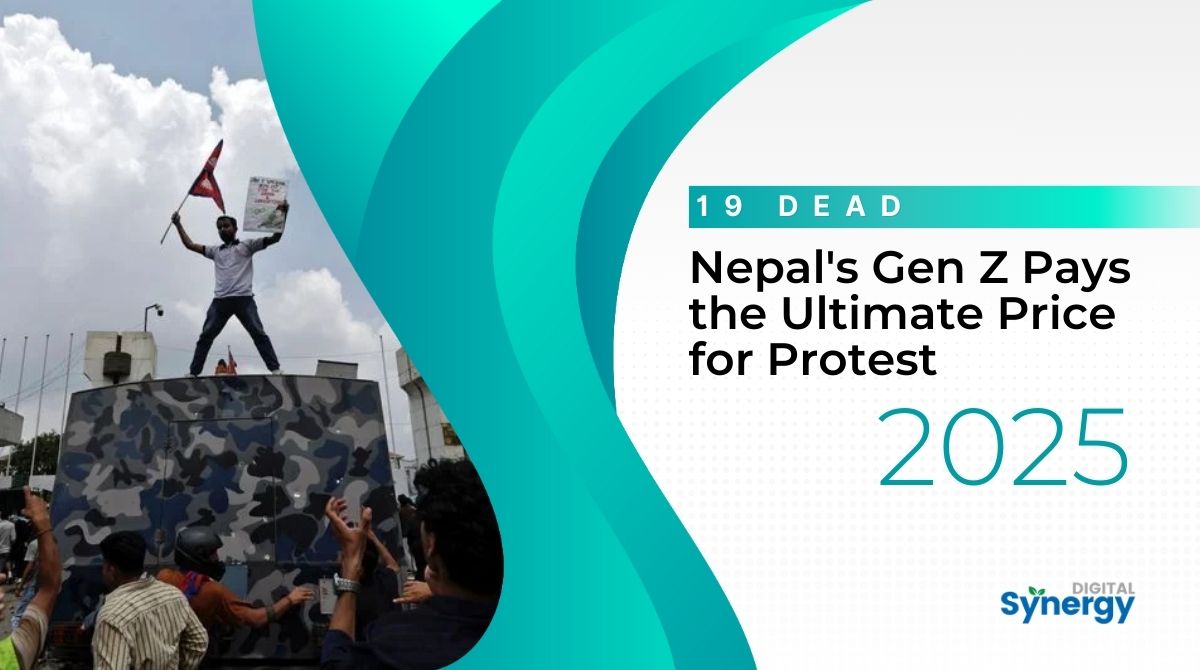
The news from Nepal is no longer just about a protest. It’s about a massacre. The number is stark and it’s final: nineteen. Nineteen lives ended. Nineteen families shattered. And for what?
This is the horrific outcome of a chain of events that started with a government decision to ban social media and ended with security forces opening fire on their own citizens. The story unfolding in Nepal is a brutal lesson in what happens when a state chooses censorship over conversation and bullets over dialogue.
The Kathmandu Post report confirms the grim tally—19 dead in protests across the country, not just in the capital. This indicates a nationwide wave of anger, met with a nationwide response of lethal force.
This isn’t a political analysis. It’s a human one. Let’s break down how we got here.
Table of Contents
1. The Official Trigger: The Social Media Ban
The government’s move was swift and absolute. Citing the need to “maintain social harmony” and curb “misinformation,” they instituted a blanket ban on major social media platforms, with TikTok being the primary target.
To the officials in power, this probably seemed like a simple regulatory decision. But to millions of young Nepalis, it was a declaration of war on their way of life. They didn’t see protection; they saw control. They saw an attempt to silence the very platforms they use to speak, to learn, to do business, and to hold power accountable. The ban wasn’t the cause of the anger; it was the final straw.
2. The Real Fuel: A Generation Feeling Erased
To understand the scale of the reaction, you must understand what you’re asking a generation to give up. For Nepal’s Gen Z, these platforms are not optional. They are essential.
- Their Public Square: It’s where news breaks, where political debates happen outside the control of traditional media, and where movements are born.
- Their Livelihood: Countless young entrepreneurs, artists, and small business owners depend on these apps for their income. The ban didn’t just mute them; it bankrupted them.
- Their Identity: This is a digitally-native generation. Their social connections and cultural identity are woven into the fabric of these online spaces. Removing them is a profound act of erasure.
The government didn’t just ban an app; it invalidated an entire generation’s reality. That is a dangerous thing to do.
3. The Peaceful Beginning: Protests Turn Outward
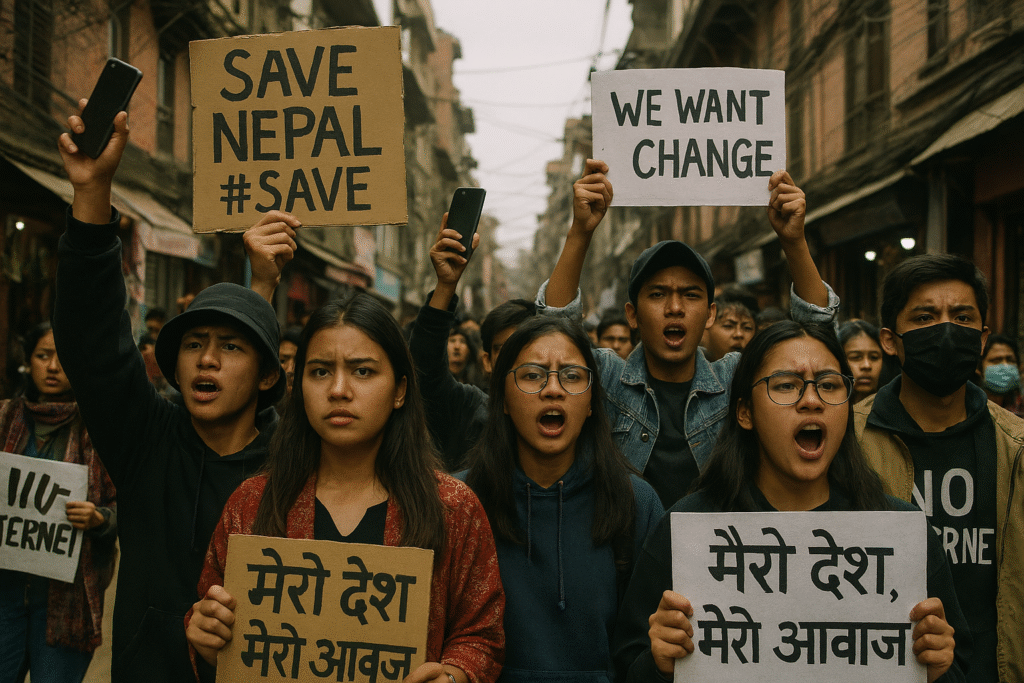
The initial response was exactly what you’d expect: mass, peaceful demonstrations. Young people gathered in Kathmandu and other cities. They carried signs. They chanted slogans. Their demand was simple and just: reverse the ban.
These were not violent mobs. They were students, creatives, and young professionals. They were exercising a fundamental democratic right—the right to assemble and protest a government action they believed was unjust.
4. The Fatal Turn: Live Ammunition on the Streets
This is where the situation transformed from a protest into a tragedy. As crowds swelled, tensions rose. There are reports of pushing, shouting, and perhaps some property damage.
Faced with this, the state had a choice. It could attempt de-escalation. It could open a channel for dialogue. It could see the protest for what it was: a cry of pain from a marginalized generation.
It chose the opposite. Security forces, seemingly following orders from the highest levels, responded to the unrest with live ammunition. They shot into crowds of their own citizens. The result was not crowd control; it was carnage. The death toll, as reported by The Kathmandu Post, speaks for itself: 19 dead across Nepal. This was not an isolated incident in one square; it was a coordinated, lethal response.
5. The Aftermath: Lockdowns, Grief, and Global Outrage
In the hours that followed, the government’s priorities became clear.
- Control the Narrative: Officials issued statements defending the security forces’ actions, labeling protesters as “vandals” and “rioters” to justify the shootings.
- Control the Population: They imposed strict curfews and deployed the army, choosing to lock down the entire country rather than address the grief and anger.
- Ignore the Truth: The sheer scale of the violence—19 deaths—makes the government’s “riot control” narrative crumble. This was a disproportionate military-style response to civil dissent.
Meanwhile, the world is reacting. Human rights organizations like Amnesty International and Human Rights Watch have condemned the killings in the strongest possible terms. The international community is calling for an immediate independent investigation. The digital ban failed; the truth got out anyway.
6. The Hard Truth: This Was Inevitable
While the scale of the violence is shocking, the conflict itself was predictable. This protest was never just about TikTok. The ban was merely the spark that lit a pre-existing fuse.
The real fuel is a toxic mix of:
- Economic Despair: Rampant inflation and a lack of opportunities have left young people with nothing to lose.
- Political Alienation: A generation feels completely ignored by an old-guard political class that doesn’t understand their needs.
- The Fight for Digital Freedom: Nepal is now a bloody front in the global battle between state control and digital rights.
The government’s fatal error was treating a deep, systemic, generational problem as a simple public order issue. You cannot solve a crisis of legitimacy with a bullet.
Conclusion: A Nation Forever Changed
Nepal has crossed a terrible threshold. The government has chosen a path of violent repression, and it has the blood of 19 of its young citizens on its hands.
There are now two paths forward. The first is more of the same: more censorship, more force, more silence. This path leads only to more anger, more instability, and ultimately, more bloodshed.
The second path is the only way out. It is difficult and requires immense courage. It means:
- Lifting the social media ban immediately.
- Launching a full, transparent, and independent investigation into the killings.
- Holding those who ordered and executed the use of live ammunition accountable.
- Finally, meaningfully engaging with the demands and aspirations of the younger generation.
The trust is broken. It will take more than words to repair it. It will take justice.
Do not look away. Share this story. Demand accountability from those in power. The world needs to know what happened in Nepal.

